Reviving Elegance: The Art of Using Victorian Fashion Lace Pages in Modern Crafting
The allure of the nineteenth century has never truly faded. From the structured silhouettes of bustle gowns to the delicate intricacy of hand-stitched lace, the Victorian era represents a pinnacle of aesthetic refinement. For modern crafters, scrapbookers, and digital artists, capturing this essence requires more than just generic vintage clipart; it demands resources that embody the specific texture and mood of the time. This is where Victorian Fashion Lace Pages have emerged as an indispensable tool for creative projects.
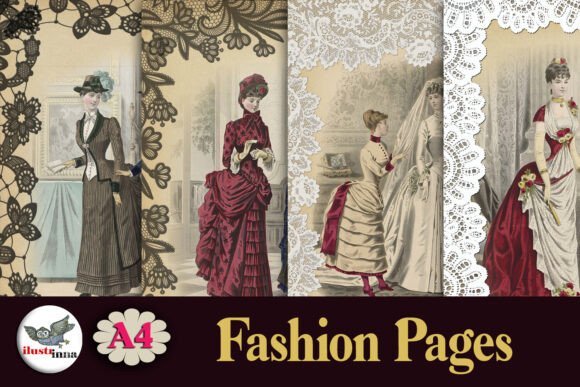
These digital assets are not merely background images. They are carefully curated compositions that blend historical accuracy with artistic flair. By combining stunning vintage fashion illustrations with intricate lace overlays, they offer a ready-made framework for storytelling on paper. Whether you are assembling a junk journal, creating custom stationery, or designing period-accurate paper dolls, understanding how to leverage these high-resolution pages can elevate your work from simple collage to sophisticated art.
The Anatomy of a Vintage Aesthetic
To appreciate the value of Victorian Fashion Lace Pages, one must first understand what makes them visually distinct. The set typically includes four A4-sized digital pages, each designed to be print-ready and high-resolution. However, the magic lies in the layering. The base often features elegant Victorian-era dresses or period interiors, rendered in the soft, muted tones characteristic of antique prints. Over this foundation, intricate lace patterns are overlaid, framing the central imagery.
This layering technique serves two purposes. First, it adds depth. Flat digital images can sometimes feel sterile when printed, but the visual complexity of lace introduces shadows, textures, and a sense of tactile reality. Second, the lace acts as a natural border. In design theory, framing is crucial for directing the viewer’s eye. The ornate edges of the lace draw attention inward toward the fashion illustration, creating a focal point that feels intentional and curated.
The inclusion of period interiors alongside fashion plates also broadens the narrative scope. While a dress tells us about personal style, an interior scene speaks to lifestyle, domesticity, and social context. Having both options within the same set allows for a richer thematic consistency in your projects. You can juxtapose the public persona of the fashionable dress with the private comfort of the parlor, adding layers of meaning to your scrapbooking layouts.
Practical Applications in Junk Journaling
Junk journaling is a form of expressive art that relies heavily on ephemera, texture, and nostalgia. It is arguably the perfect medium for Victorian Fashion Lace Pages. Because junk journals often celebrate the imperfect and the aged, the vintage nature of these pages integrates seamlessly without requiring excessive distressing or aging techniques.
- Background Layers: Print the pages at full size to use as foundational backgrounds. The lace borders provide a natural edge for tearing or cutting, allowing you to create ragged, organic looks that fit the junk journal aesthetic.
- Pocket Creation: Use the solid or less detailed areas of the interior scenes to glue down three sides, creating pockets for holding tickets, notes, or smaller clippings.
- Tag and Bookmark Bases: Cut out sections of the lace overlay to create decorative tags. The intricate patterns look stunning when layered over solid cardstock or burlap.
When working with these pages in a junk journal, consider the weight of the paper you choose for printing. A heavier cardstock (around 200gsm) will hold up better to glues, washes, and handling, while still allowing the fine details of the lace to remain crisp. Lighter paper may buckle under wet adhesives, potentially obscuring the delicate lines that make these illustrations so appealing.
Elevating Paper Dolls and Historical Scrapbooking
Beyond journaling, these digital pages serve as excellent resources for paper craft enthusiasts. The fashion illustrations featured in Victorian Fashion Lace Pages are ideal for creating high-quality paper dolls. Unlike modern cartoonish versions, these figures reflect the actual proportions and garment structures of the 1800s. Crafters can cut out the dresses and bodies, using the lace elements from the page borders to create separate, delicate accessories like shawls, collars, or trimmings.
For historical scrapbooking, authenticity is key. Many hobbyists struggle to find images that do not look overly processed or digitally manipulated. These pages maintain the grain and tonal range of original lithographs and engravings. When documenting a family history or creating a themed album about historical fiction, using these pages as chapter dividers or title pages adds an immediate sense of gravitas and timelessness.
Consider the scenario of creating a wedding album with a vintage theme. The lace overlays mirror the traditional bridal lace, creating a cohesive visual language throughout the book. By printing these pages and using them as mats for photographs, you bridge the gap between contemporary photography and historical design motifs. The result is a harmonious blend of old and new, where the past frames the present.
Technical Considerations for Best Results
To get the most out of your Victorian Fashion Lace Pages, attention to technical detail is essential. Since these are digital products, the quality of your output depends largely on your printing setup. Here are some practical recommendations:
- Resolution Matters: Ensure your printer settings are set to "High Quality" or "Photo" mode. Standard document settings may blur the fine lines of the lace, turning intricate patterns into muddy gray blobs.
- Color Calibration: Vintage prints often rely on sepia, cream, and soft black tones. If your printer leans too cool (blue), the images may look stark and modern. Adjusting your color balance slightly toward warm tones can enhance the antique feel.
- Paper Choice: As mentioned, cardstock is ideal for structural elements. However, for a more translucent, ethereal effect, try printing on vellum or tracing paper. Layering a vellum print of the lace overlay over a solid color or a photograph creates a ghostly, dreamlike quality that is highly prized in mixed media art.
It is also worth noting the versatility of digital formats. Because these pages are digital, you can resize them without losing quality, provided the original file is high-resolution. This means you can shrink a full A4 page down to a tag size, or enlarge specific details for a close-up abstract background. This flexibility allows for endless customization, ensuring that no two projects need look the same.
Integrating Timeless Style into Daily Creativity
In an age of fast digital consumption, there is a growing movement toward slow crafting—taking time to create physical objects with care and intention. Victorian Fashion Lace Pages support this lifestyle by providing a starting point that inspires mindfulness. The act of selecting which page to use, deciding how to crop the lace, and choosing complementary colors forces the creator to slow down and engage with the aesthetic details.
Moreover, these pages are not limited to professional artists. They are accessible to anyone with a home printer and a love for beauty. Teachers might use them for history projects, helping students visualize the era they are studying. Writers might print them to create atmospheric mood boards for their novels. The applications are limited only by imagination.
The emotional resonance of Victorian imagery cannot be overstated. It evokes a sense of romance, mystery, and elegance. By incorporating these elements into your work, you are not just decorating a page; you are invoking a mood. Whether it is the sturdy elegance of a bustle gown or the fragile beauty of a lace doily, these images carry cultural weight that enriches any project they touch.
Ultimately, the value of Victorian Fashion Lace Pages lies in their ability to bridge the gap between historical appreciation and modern creation. They offer a convenient, high-quality resource that respects the intricacy of the past while fitting seamlessly into contemporary workflows. For those looking to add a touch of timeless style to their creative endeavors, these pages are not just a supply—they are an inspiration.